Meaning Of The Nativity Of Our Lord
December 25
The two feasts of Christ’s birth and of His baptism are so closely linked together as to form in reality one single and undivided observance. The Church’s Year contains accordingly two great moments, two ‘poles’: The first is Easter, the second, Christmas and Theophany. Before Christmas, as before Easter, there is a lengthy and elaborate period of preparation. Christmas is preceded by a fast corresponding to Lent and lasting for forty days. On the Sundays immediately before December 25, there are special commemorations which emphasize the link between the Old Covenant and the New.
The second Sunday before Christmas-- the Sunday of the Forefathers calls to remembrance the ancestors of Christ according to the flesh, whether before or under the Law. The Sunday that follows is still broader in scope, commemorating all the righteous men and women who pleased God from the beginning of time, from the days of Adam the first man down to Joseph, the betrothed of the Mother of God. Approaching Christmas in this way, the worshipper is enabled to see the incarnation, not as an abrupt and irrational intervention of the divine, but as the culmination of a long process extending over thousands of years.
The forefeast of Christmas commences on December 20, and from this point onwards most of the texts are directly concerned with Christ’s Nativity. On Christmas Eve (December 24)--which is known by the special title paramoni (a watch or vigil)--the services take an exceptional form. The Hours are unusually long and are termed the Great or Royal Hours, since they were attended in Byzantine period by the emperor and court. They are followed by Great Vespers and the Liturgy of St. Basil.
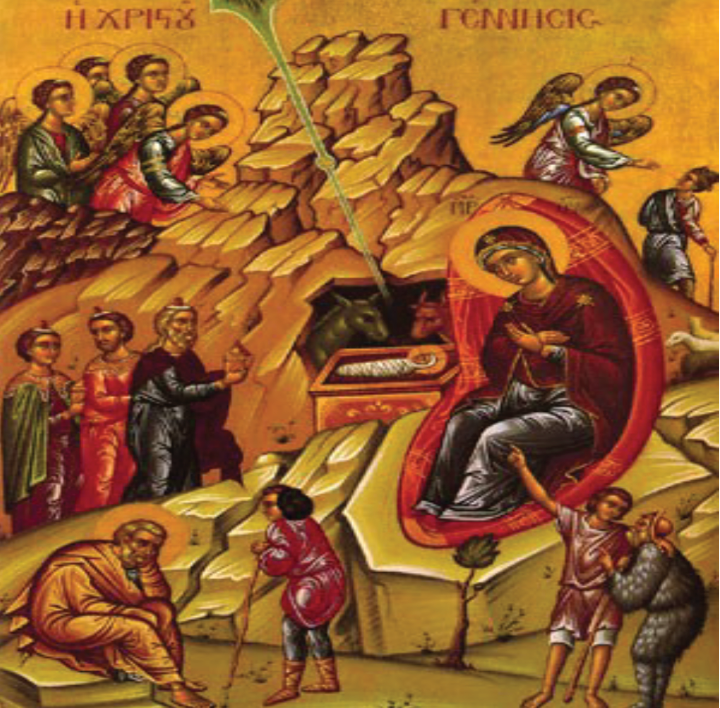
On Christmas Day itself the service commemorate not only the birth of Christ in Bethlehem and the adoration of the shepherds, but also the arrival of the Magi with their gifts of gold, frankincense, and myrrh. The story of the three Wise Men (Matthew 2:1-12 which in the Roman and Anglican use is appointed for January 6, is read in the Byzantine rite on the morning of December 25.
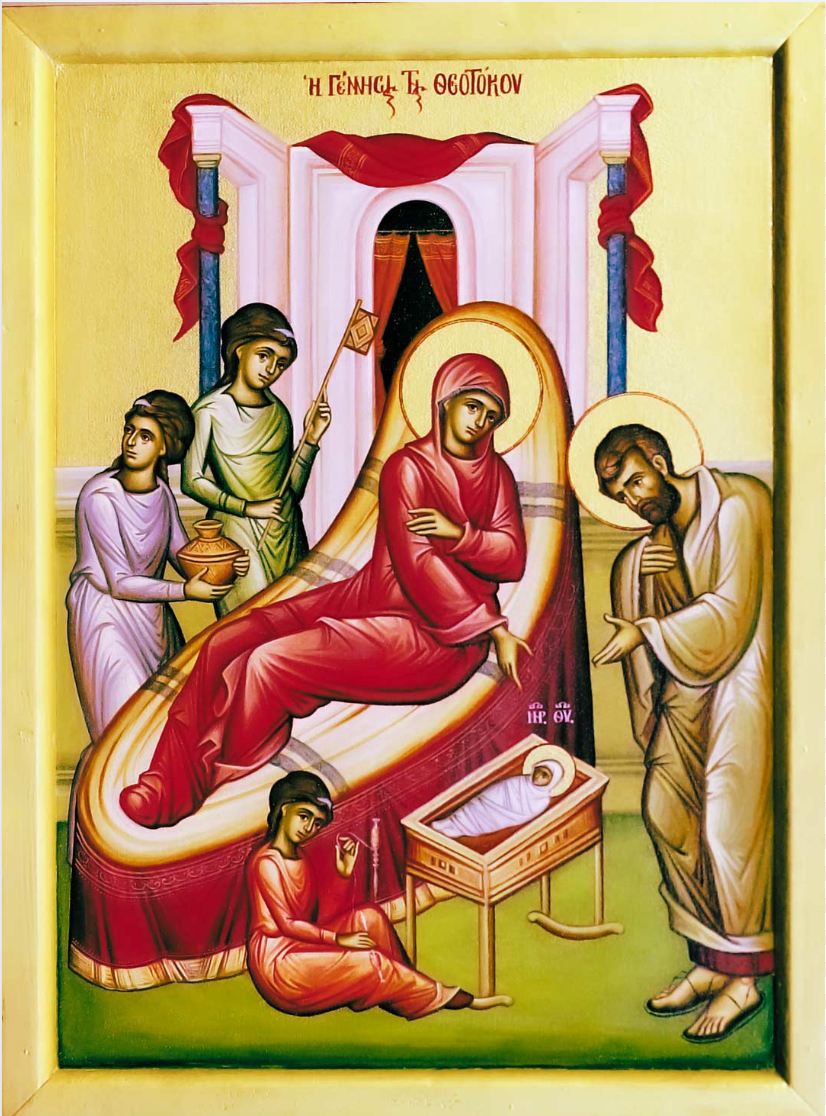
The familiar and homely elements of the Nativity story - - the baby wrapped in swaddling clothes and laid in a manger, the ox and the ass beside Him, the shepherds watching with their flocks by night -- are by no means forgotten in the Orthodox hymns for this day. But the main center of interest lies elsewhere: not in these picturesque details, touching though they may be, not simply in the humanity of the child Jesus, but rather in the paradoxical union of that humanity with the divinity. ‘A young child, the pre-eternal God’ (kontakion of the feast): this is the supreme and crucial meaning of Christmas. Without ceasing to be what He is from all eternity -- true God -- One of the Trinity yet became truly and entirely man, born as a baby from a human mother
It is to this theme, under ceaselessly varying forms, that the liturgical texts of the day continually revert -- to the contrast between the divine and the human in the one Person of the Incarnate Christ. He who formed the world now Himself ‘takes form’ as a creature; the Creator makes Himself to be created; ‘He who holds the whole creation in the hollow of His hand today is born of the Virgin’ (Christmas Eve, Ninth Hour); ‘older than ancient Adam’, He lies in His mother’s arms; the Lord of Glory, who ‘looses the tangled cords of sin’, is wrapped in swaddling bands; He who is the divine Reason (Logos) rests in a manger of beasts without reason (aloga); He is fed with milk who gives food to all the universe. Passages such as these are more than a rhetorical tour de force: they are intended to make the members of the Church realize, in some small measure, how strange and amazing the thing it is that God should become very man. as the worshipper stands in spirit beside the crib, it is not enough for him to see, lying in the straw, ‘gentle Jesus meek and mild’; he must see more than this -- the Son of God, begotten of His Father before all ages, Light from Light, true God from true God.
The days following Christmas are associated with the two who were nearest to God at His Nativity -- His mother and His foster-father. December 26 is the Synaxis of the Mother of God, while the first Sunday after Christmas commemorates ‘Joseph the Betrothed’, along with David, the ancestor of Our Lord, and St. James (Iakovos)’ the Brother of God’. Other events connected with Christ’s infancy are remembered on December 29 (the Massacre of the Innocents) and January 1 (the Circumcision of Our Lord). Although the after feast of Christmas concludes on December 31, the spirit of the festival extends until the eve of Theophany, all fasting being suspended in the ten days that follow Christmas.
From: The Festal Menaion
.