HOLY WEEK

REV. ANDREW DEMOTSES • April 1, 2024

Holy Week is the sacred time during which .  .

For many of us, our earliest religious memories are those of Holy Week's solemn services and rituals. Despite their solemnity, these recollections are always fascinating, and remind us of what a Christian is--a person who follows the One who has known acclaim, abandonment, defeat, crucifixion, and finally, the silence of the tomb. But even the finality of that tomb could not silence Him.


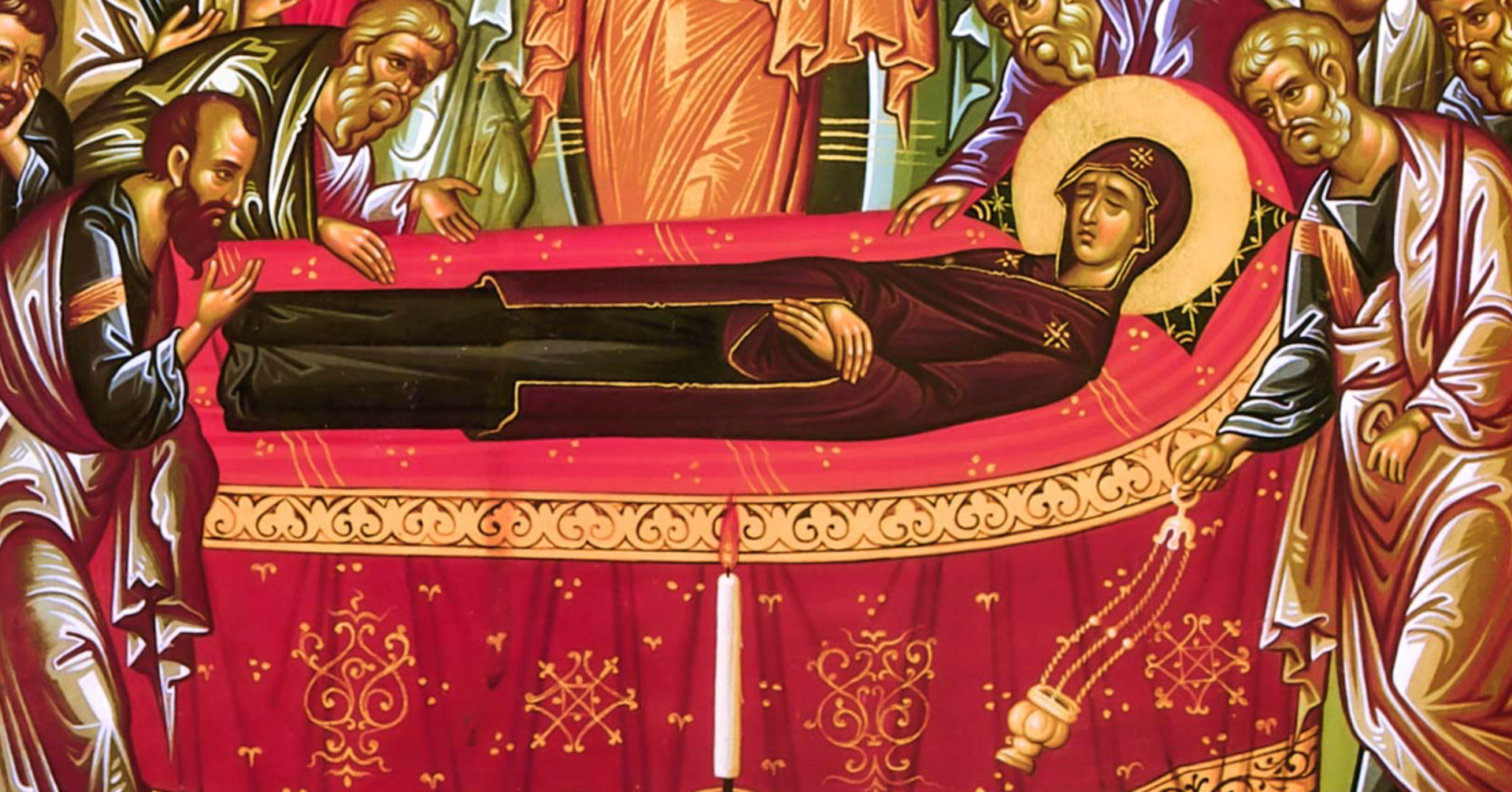
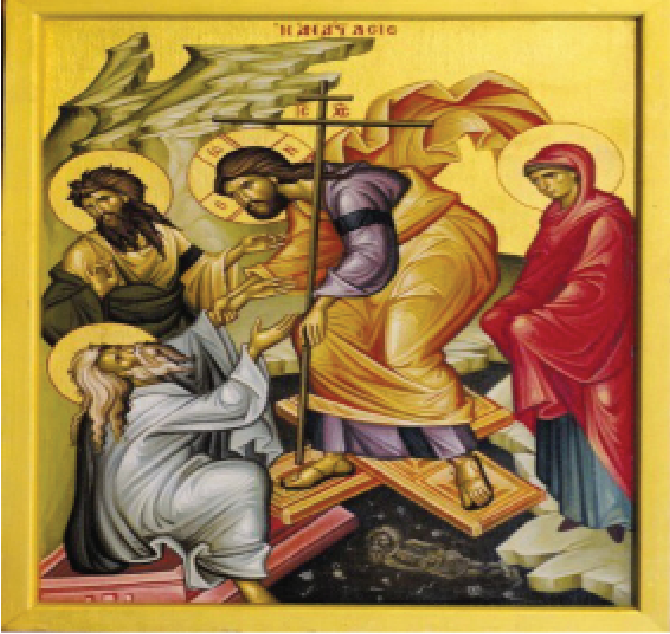
It is a week that begins with the resurrection of Lazarus, and Palm Sunday, with its passing moments of popular success, waving palms, and shouted hosannas. It continues with the Last Supper, in which Christ revealed the Bread of Life and the Cup of Blessing that is the Eucharist or Holy Communion. It continues with the drama of a night of prayer ending in the betraying kiss of a friend, and in arrest and humiliation, and seems to end with Good Friday with its torture, its mother's tears, a shameful death, and the frightening silence that followed.

Holy Week, in its yearly and faithful enactment, teaches us that Christ' love for us could not be crushed. The message which He shared could not be stilled. The large stone could not contain Him in the terrible darkness of that tomb. Jesus Christ also rose from the dead. And together with Him, there arose every hope that we have for mercy, strength, perseverance, and everlasting life.

Holy Week is the sacred time during which these memories become present in the liturgies and the sacraments of our churches, and in the practices and the rituals of our homes, passed down to us by our parents and teachers in the faith from the beginning until our own day. This is the week in which the life-giving events in the saving ministry of Jesus Christ become real for each of us. It is the week during which Christ turns to us in a real way and says to us, "Come and follow me." He invites us to consecrate our own individual pain and suffering in obedience to God, and to share with Him in the great victory over death which He won for us all. To Him may there be glory forever.


November 2, 2025
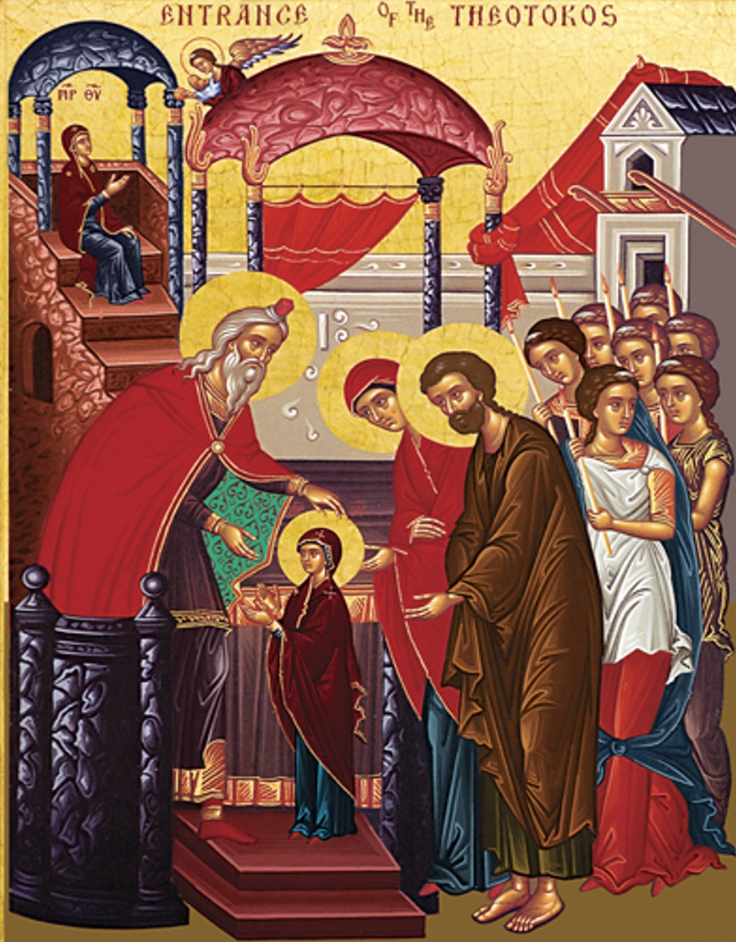
November 21 Introduction The Feast of the Entrance into the Temple of Our Most Holy Lady the Theotokos and Ever-Virgin Mary is celebrated on November 21 each year. The Feast commemorates when as a young child, the Virgin Mary entered the Temple in Jerusalem. Protevangelion Story The birth and early life of the Virgin Mary is not recorded in the Gospels or other books of the New Testament, however this information can be found in a work dating from the second century known as the Book of James or Protevangelion. When Mary was three years old, Joachim and Anna decided that the time had come to fulfill their promise and to offer her to the Lord. Joachim gathered the young girls of the neighborhood to form an escort, and he made them go in front of Mary, carrying torches. Captivated by the torches, the young child followed joyfully to the Temple, not once looking back at her parents nor weeping as she was parted from them. The holy Virgin ran toward the Temple, overtaking her attendant maidens and threw herself into the arms of the High Priest Zacharias, who was waiting for her at the gate of the Temple with the elders. Zacharias blessed her saying, "It is in you that He has glorified your name in every generation. It is in you that He will reveal the Redemption that He has prepared for His people in the last days." Then, Zacharias brought the child into the Holy of Holies—a place where only the High Priest was permitted to enter once a year on the Day of Atonement. He placed her on the steps of the altar, and the grace of the Lord descended upon her. She arose and expressed her joy in a dance as wonder seized all who saw this happen. The Virgin Mary dwelt in the Temple for nine years until, reaching an age for marriage, she was taken from the Temple by the priests and elders and entrusted to Joseph as the guardian of her virginity. The Entrance of the Theotokos into the Temple signifies her total dedication to God and her readiness for her future vocation as the Mother of the Incarnate Lord. This is a feast of anticipation. As honor is shown to Mary, the faithful are called to look forward to the Incarnation of Christ, celebrated in a little more than a month by the Feast of the Nativity on December 25. Icon of the Feast The icon of the feast tells the story of Mary's entry into the Temple. The High Priest, Zacharias, is in his priestly robes standing on the step of the Temple. His arms are outstretched, ready to greet and receive the Virgin. Mary is shown as a small child, standing before Zacharias with her arms reaching up to him. In some icons the young maidens who served as her escort are depicted standing behind her. Also, we see her parents, Joachim and Anna, offering their child to God and His divine service. In the upper center portion of the icon, the Virgin is seated on the steps of the Holy of Holies. An angel is there, attending to the one chosen by God to bring the Savior into the world. Orthodox Christian Celebration of the Feast of the Entrance of the Theotokos The Feast of the Entrance of the Theotokos is celebrated with the Divine Liturgy of Saint John Chrysostom which is conducted on the morning of the Feast and preceded by a Matins (Orthros) service. A Great Vespers is conducted on the evening before the day of the Feast. Scripture readings for the Feast are the following: At Vespers: Exodus 40:1-5 , 9-10, 16, 34-35; I Kings 7:51, 8:1, 3-4, 6-7, 9-11; Ezekiel 43:27—44:4. At the Matins: Luke 1:39-49, 56. At the Divine Liturgy: Hebrews 9:1-7; Luke 10:38-42; 11:27-28. Resources Festival Icons for the Christian Year by John Baggley (Crestwood, NY: St. Vladimir's Seminary Press, 2000), pp. 16-20 The Festal Menaion. Translated by Mother Mary (South Canaan, PA: St. Tikhon’s Seminary Press, 1969) pp. 51-52 The Incarnate God: The Feasts of Jesus Christ and the Virgin Mary, Catherine Aslanoff, editor and Paul Meyendorff, translator (Crestwood, NY: St. Vladimir’s Seminary Press, 1995) The Synaxarion: The Lives of the Saints of the Orthodox Church, Vol. 2, compiled by Hieromonk Makarios of Simonos Petra and translated from the French by Christopher Hookway (Chalkidike, Greece: Holy Convent of the Annunciation of Our Lady, 1999) pp. 193-196. Icon of the Entrance of the Theotokos to the Temple presented in the page header and in the article introduction provided by Athanasios Clark and used with permission. Icon of the Entrance of the Theotokos to the Template presented in the "Icon of the Feast" section provided by Theologic Systems and used with permission.
April 28, 2025
By: Rev Andrew J Demotses The saints of our faith have observed that God is a purposeful farmer who seeks an abundant harvest of spiritual fruit from each of us. He expects that we will do more than just consider ourselves Christians, but will act on our faith in a way that will make the presence of Christ real not only in our own lives, but in the lives of others. Scripture warns us that the Lord is like the farmer of Palestine, where land is precious and there is no room for a tree that does not bear fruit. “The axe is ready to cut down the trees at the roots; every tree that does not bear good fruit will be cut down and thrown in the fire.” (Matt. 3:10). As if to emphasize this truth, Jesus cursed the barren fig tree, and it withered at once. (Matt. 21:18-19). Paradoxically, it is oftentimes in the experience of pain and suffering that we are most prepared to bear an abundant harvest of spiritual fruit. Good times tend to make us complacent and self-satisfied. Sorrow, tribulation, ill health, and disappointment, however, have a way of stimulating us to re-order our priorities and help us to gain perspective and maturity. I have found that it is through my own personal suffering that I have gained my greatest compassion and understanding for others. Jesus was perhaps helping us to understand this when he said, “A grain of wheat remains no more than a single grain unless it is dropped into the ground and dies. If it does die, it produces many grains.” (Jn. 12:24). As a young man, I once saw a wise neighbor severely prune a mature apple tree that bore sparse fruit. The next year, with far fewer branches newly exposed to sunlight, the tree produced an abundant harvest. In this same way, we too can produce spiritual fruitfulness from the pruning shears of our own affliction. From this perspective, the experience of pain is not perceived as meaningless punishment, but rather as an opportunity for growth. While we do not seek suffering in our life, we nonetheless accept it, together with all other things, as God’s saving opportunity to help us live so that hopefully as people get to know us, they will get to know Christ as well.
April 24, 2024
Before midnight on Saturday evening, the Odes of Lamentation of the previous day
April 18, 2024
It is one of the most beloved services in the Orthodox Church.
January 29, 2024
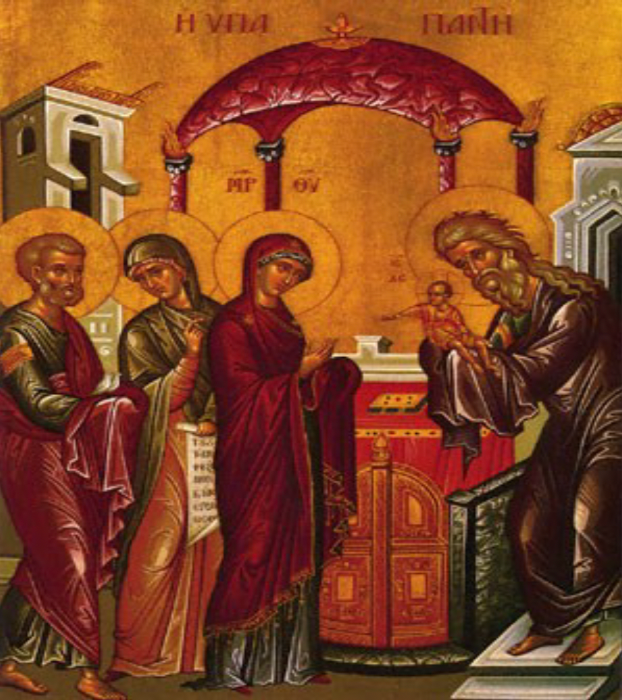
Presentation of Our Lord & Savior Jesus Christ into the Temple
October 2, 2023
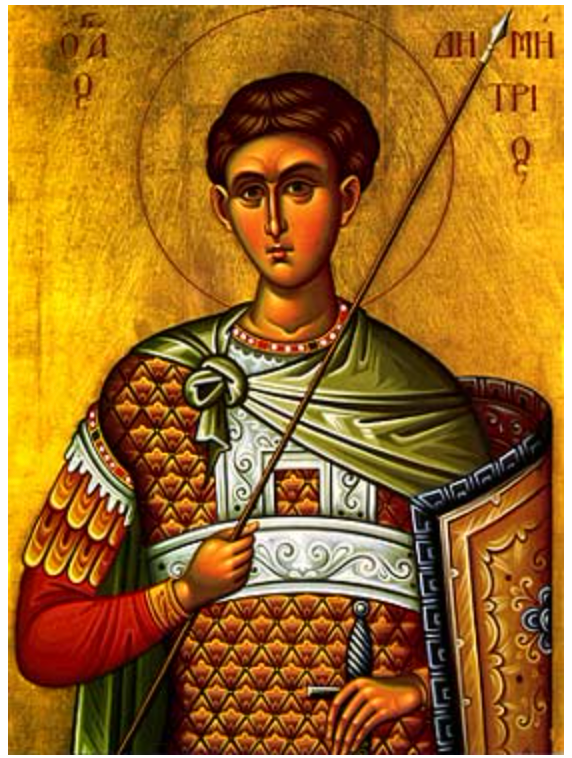
Demetrios was a native of the city of Thessaloniki
September 3, 2023
The Ever-Virgin Mary is celebrated on September 8 each year
September 3, 2023
In the liturgical observances of Good Friday the Church views the Crucifixion
September 3, 2023
Does God come first in my giving?
By REV. ANDREW DEMOTSES September 3, 2023
Anyone who reads the New Testament seriously is almost always surprised
More Posts